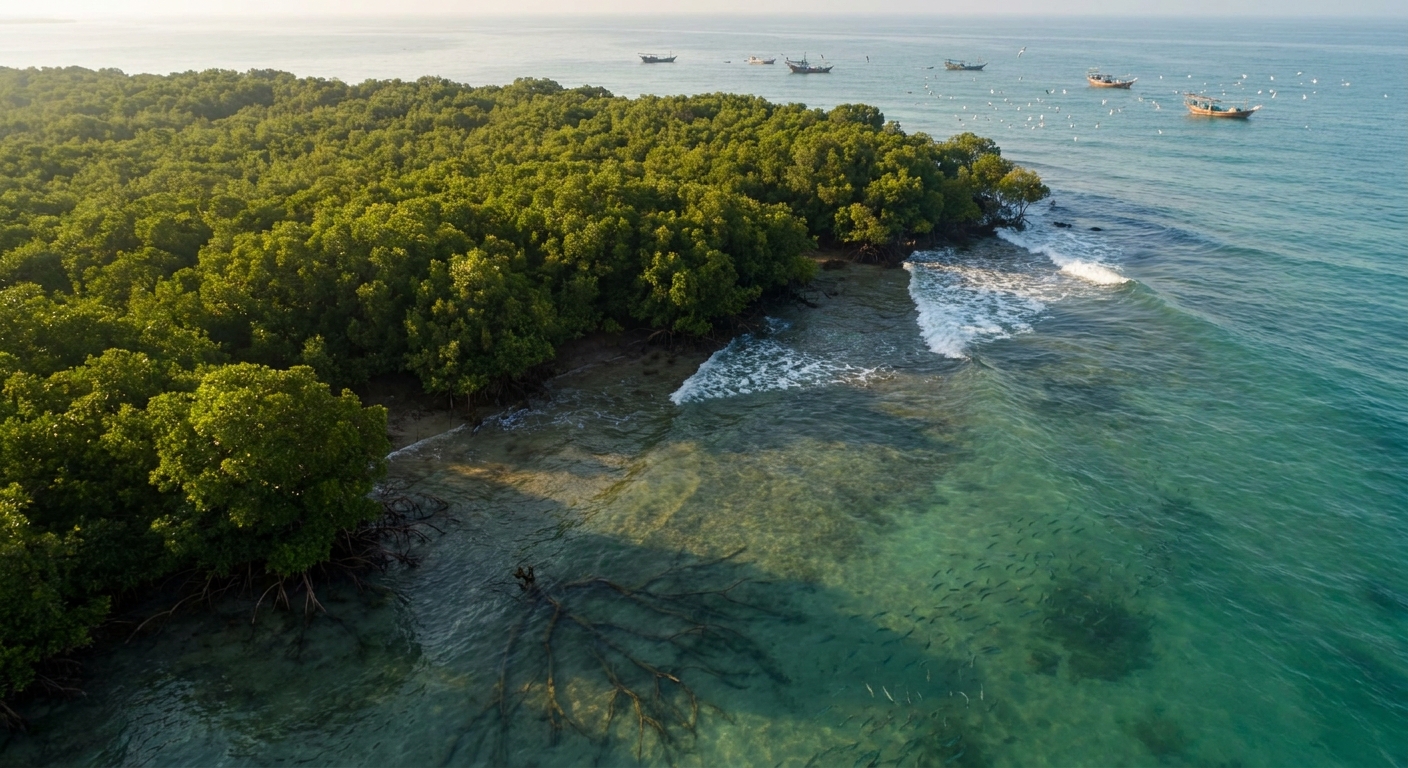
From orbit, coastlines look like thin silver threads. Up close, they’re among the most biologically intense places on Earth. Coastal ecosystems—estuaries, mangroves, seagrass meadows, rocky shores, sandy beaches, salt marshes, coral-fringed lagoons—occupy a narrow band where land meets sea, yet they punch far above their weight in productivity, biodiversity, and climate influence.
Why Coasts Are the Beating Heart of the Ocean
For ocean enthusiasts and marine biology fans, understanding coastal ecosystems is like finding the key to the ocean’s control room. They regulate nutrient flows, buffer storms, lock away carbon, and serve as nurseries for a huge share of marine life.
The Physics of the Edge: Why Coasts Are So Productive
Coastal zones are powered by gradients and mixing:
- Light penetration: Shallow waters mean plenty of sunlight for photosynthesis, fueling phytoplankton, macroalgae, and seagrasses.
- Nutrient inputs: Rivers, upwelling, and tidal mixing deliver nitrogen, phosphorus, and trace elements at rates the open ocean rarely matches.
- Physical complexity: Sandbars, reefs, mudflats, and rocky outcrops create microhabitats with different wave exposure, sediment types, and oxygen levels.
This combination produces extraordinary biological output. Some estimates suggest over 30% of global marine primary productivity happens in coastal waters that cover a small fraction of the ocean’s surface.
Estuaries: Nurseries Where Salt and Freshwater Collide
Estuaries—where rivers meet the sea—are among the most dynamic ecosystems on Earth. Salinity changes hourly with tides and seasons, and organisms living here are biochemical masters of osmoregulation.
Species Spotlight: The Atlantic Menhaden (Brevoortia tyrannus)
Often overlooked, menhaden are filter-feeding fish that migrate into estuaries as larvae and juveniles. They:
- Filter phytoplankton and small particles from the water column
- Convert low-trophic-level biomass into food for larger fish, birds, and marine mammals
- Influence nutrient cycling and water clarity
Recent research using otolith chemistry (chemical signatures in fish ear bones) has shown that juvenile menhaden use a mosaic of estuarine habitats rather than a single nursery, underscoring the need to conserve entire estuarine networks—not just one bay or river mouth.
Estuaries as Climate Buffers
A 2023 synthesis of global estuarine data found that well-vegetated estuaries can act as net carbon sinks, while degraded, hypoxic estuaries often become net CO₂ and methane sources. The difference hinges on:
- The health of salt marshes and mangroves
- Nutrient loading from upstream agriculture and cities
- Frequency of hypoxic events and sediment disturbance
Mangroves, Marshes, and Seagrass: The Blue Carbon Powerhouses
Collectively known as blue carbon ecosystems, mangrove forests, salt marshes, and seagrass meadows capture and store carbon in both biomass and sediments.
Mangroves: Architects of the Intertidal Zone
Mangroves thrive in brackish, low-oxygen sediments that would suffocate many plants. Their aerial roots and pneumatophores oxygenate sediments and trap particles, building land over time.
Key functions:
- Storm buffering: Dissipate wave energy and storm surges
- Nursery habitat: For reef fish, crustaceans, and invertebrates
- Carbon storage: Some mangrove soils hold 3–5 times more carbon per hectare than tropical upland forests
A 2022 global mapping effort using high-resolution satellite imagery revealed we had been underestimating mangrove biomass. Updated models suggest mangroves may sequester over 10% of the world’s coastal blue carbon despite covering a small area.
Seagrass Meadows: Hidden Meadows Under Waves
Seagrasses are flowering plants (not algae) that form dense underwater meadows. They:
- Stabilize sediments, reducing resuspension
- Provide habitat for fish, invertebrates, and juvenile turtles
- Enhance water clarity by slowing currents and trapping particles
Genomic studies published in 2022–2023 show that some seagrass species like Posidonia australis form massive clonal meadows that can be thousands of years old. These superorganisms are living environmental archives, recording changes in water quality and temperature in their sediments and tissues.
Coral Reefs and Coasts: An Interdependent Partnership
Where coral reefs border coasts, they function as biogenic breakwaters, absorbing wave energy and protecting shorelines. In return, terrestrial and coastal ecosystems supply:
- Nutrients via dust, riverine input, and groundwater
- Organic matter from mangroves and seagrasses, fueling reef food webs
Recent isotope-tracing research in the Caribbean has demonstrated that mangrove-derived carbon makes up a measurable fraction of the diet of some reef fishes, strengthening the case for managing reefs, mangroves, and seagrasses as a single ecological complex.
Coastal Food Webs: From Microbes to Megafauna
Coastal ecosystems are not just species-rich; they’re interaction-dense.
Microbial Engines
Microbes mediate key processes:
- Nitrogen fixation: Cyanobacteria convert atmospheric nitrogen into biologically usable forms
- Denitrification: Bacteria remove excess nitrogen by converting nitrate to N₂ gas, helping control eutrophication
- Decomposition: Breaking down detritus and recycling nutrients
Metagenomic surveys over the past five years have revealed highly specialized microbial communities on mangrove roots, seagrass blades, and salt-marsh sediments—each tuned to subtle shifts in oxygen, salinity, and organic matter.
Higher Trophic Levels
- Shorebirds depend on mudflats and marshes for migratory stopovers
- Juvenile sharks and rays use shallow bays and mangrove-fringed lagoons as nurseries
- Marine mammals (manatees, dugongs, dolphins) forage, rest, and rear young along sheltered coasts
Stable isotope studies increasingly reveal how interconnected these communities are; a single patch of seagrass can influence diets of offshore predators via complex trophic linkages.
Pressures on Coastal Ecosystems: Compression at the Line
Coasts are where human populations concentrate, so they bear the brunt of:
- Habitat conversion: Mangroves to shrimp ponds, marshes to farmland, dunes to urban development
- Nutrient and pollutant loading: Leading to algal blooms, hypoxia, and dead zones
- Physical modification: Seawalls, jetties, dredging that disrupt natural sediment transport
- Climate change: Sea-level rise, warming waters, and intensifying storms
A 2022 global analysis estimated that over 50% of natural coastal wetlands have been lost since 1900. In many regions, the remaining habitats are squeezed between rising seas and hard infrastructure—a phenomenon called coastal squeeze.
Conservation and Restoration: Rebuilding Function, Not Just Form
Nature-Based Solutions
New coastal management is shifting away from concrete and toward hybrid, nature-based solutions:
- Living shorelines that use oyster reefs, marsh plantings, and coir logs instead of seawalls
- Mangrove and salt-marsh restoration designed to accommodate future sea-level rise
- Seagrass transplanting and water-quality improvements to enable natural recovery
Field experiments in the US, Europe, and Asia show living shorelines can match or exceed the protective value of traditional hard infrastructure while supporting biodiversity and blue carbon storage.
Blue Carbon Policy
Countries are starting to integrate blue carbon ecosystems into their Nationally Determined Contributions (NDCs) under the Paris Agreement. Meanwhile, verification protocols for blue carbon credits are being refined to ensure:
- Long-term permanence of stored carbon
- Accurate accounting of both above- and below-ground storage
- Protection of local and Indigenous rights
How Ocean Enthusiasts Can Engage with Coastal Science
- Support monitoring programs: Many projects welcome citizen scientists to help collect data on water quality, seagrass cover, or bird counts.
- Dive beyond the reef: Pay attention to mangrove edges, tidal flats, and seagrass beds on trips—they’re equally critical.
- Follow the data: Explore open datasets from programs like the Global Mangrove Watch or Seagrass-Watch.
Coasts are literal and figurative edges—zones of exchange, conflict, and creativity in the Earth system. Understanding them is not just about saving a scenic fringe; it’s about maintaining the engines that drive ocean life and stabilize the climate.