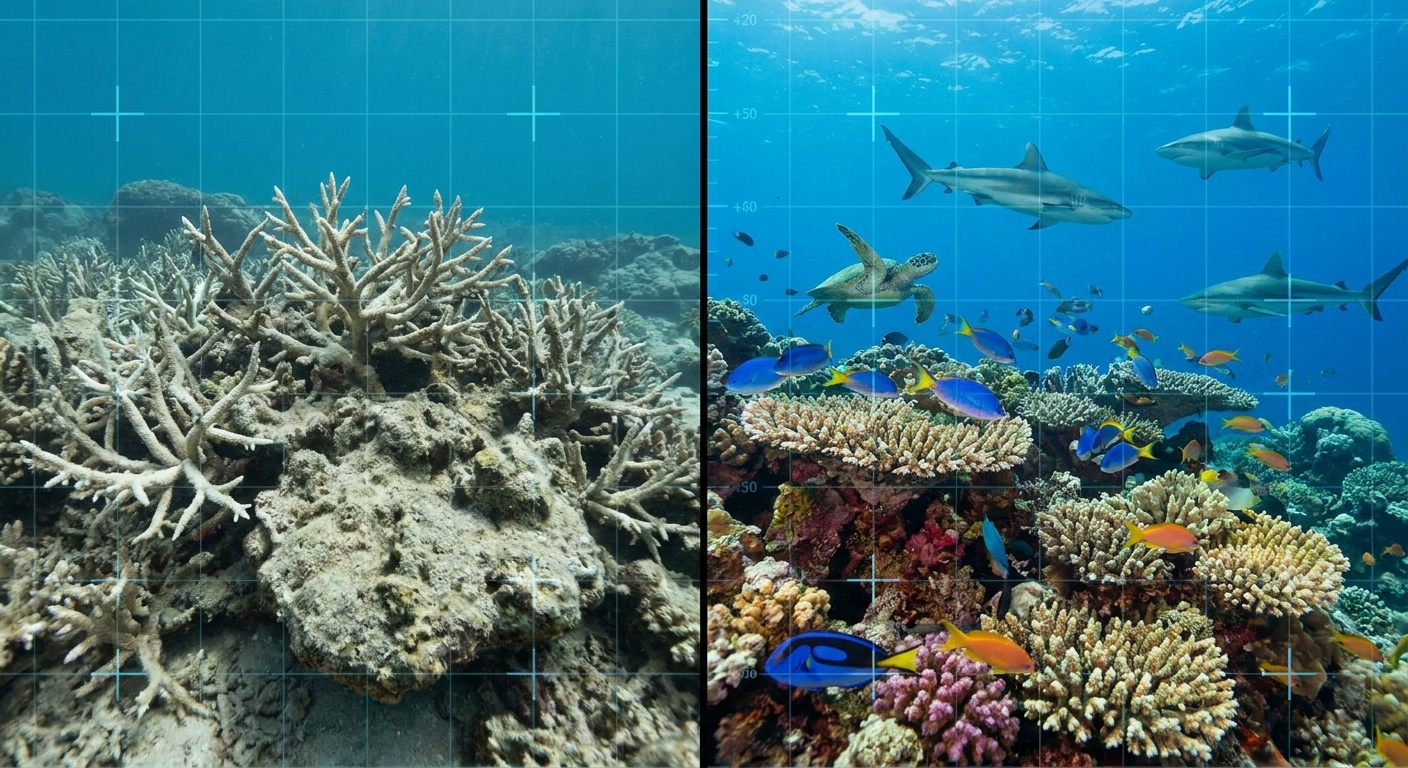
Marine Protected Areas (MPAs) are often described as the "national parks of the sea," but that metaphor undersells their scientific power. Around the world, MPAs are functioning as large-scale experiments in how oceans recover when humans step back. For marine biology fans, they offer a rare, real-time glimpse into ecosystem resilience and evolutionary change.
The Ocean’s Experimental Labs
As of 2024, roughly 8.2% of the global ocean is within some form of MPA, but only about 3% is strongly or fully protected from extractive activities like fishing and mining. The gap between nominal and actual protection is becoming one of the central scientific and policy questions in ocean conservation.
What Happens When You Hit “Pause” on Extraction?
The Rapid Rebound Effect
Multiple long-term studies from locations such as the Great Barrier Reef, the California Channel Islands, and Cabo Pulmo in Mexico show a consistent pattern: when fishing is significantly restricted or banned, biomass bounces back fast.
- Fish biomass inside fully protected MPAs can be, on average, 400–600% higher than in adjacent fished areas.
- Top predators—sharks, groupers, large snappers—often show the most dramatic recoveries because they are heavily targeted outside MPAs.
A 2021 global synthesis in One Earth examined 118 MPAs and found that fully protected areas produced the strongest ecological benefits, including greater species richness, larger body sizes, and more complex food webs.
The Spillover Phenomenon
Fish don’t recognize invisible MPA boundaries. As populations recover inside protected zones, adults and larvae disperse into nearby fished waters. This spillover can boost local fisheries and partially offset short-term losses from closing areas to fishing.
For instance, at Cabo Pulmo National Park in the Gulf of California, fish biomass increased more than 400% over a decade after full protection. Subsequent research documented increased catches in nearby fishing villages, suggesting that a well-managed MPA can be both a biodiversity reservoir and a socioeconomic engine.
Species in the Spotlight: Architects of Recovery
Parrotfish: Coral Reef Gardeners
On coral reefs, parrotfish are keystone species. They graze on algae that otherwise smother corals, effectively maintaining the real estate on which coral larvae can settle.
Recent work in the Caribbean and Pacific shows that:
- MPAs with strong protections tend to have higher densities of large parrotfish.
- Reefs inside those MPAs often feature more live coral cover and lower algal dominance, especially after disturbances like bleaching events.
MPAs, by safeguarding parrotfish, indirectly preserve the competitive balance that keeps coral reefs from flipping into algae-dominated states.
Sharks: Rewiring the Food Web
Sharks are more than charismatic megafauna; they are mobile apex predators that influence prey behavior and community structure.
A 2020 study in Nature using baited remote underwater video systems across 371 reefs found that shark numbers were up to two to three times higher in strongly enforced MPAs compared with open-access areas.
Their presence is associated with:
- More balanced trophic structures (fewer boom-bust cycles in mid-level predators)
- Potential shifts in prey foraging behavior that reduce overgrazing of key habitats like seagrass beds
This behavioral “landscape of fear” can protect foundational habitats in ways that are only starting to be quantified.
MPAs as Climate Refugia and Laboratories
Coral Reefs and Thermal Stress
No MPA can block heat. Marine heatwaves and mass bleaching events still affect reefs, protected or not. Yet, recent work suggests MPAs can serve as climate refugia under certain conditions.
A 2022 meta-analysis in Global Change Biology found that while MPAs do not prevent bleaching, reefs with higher fish biomass and healthier herbivore communities tend to recover better post-bleaching. They retain more structural complexity and show higher coral recruitment.
In practice, this means MPAs can:
- Protect reef “seed banks” that reseed damaged areas
- Maintain complex reef architecture that supports biodiversity even after coral mortality
Blue Carbon in Marine Reserves
Seagrass meadows, mangrove forests, and salt marshes are major blue carbon sinks—storing carbon at rates up to ten times higher than terrestrial forests per unit area. MPAs that include these habitats can lock away substantial amounts of carbon in sediments.
New research is quantifying how disturbance-free sediments in protected coastal zones store and accumulate organic carbon over decades to centuries. Protecting these habitats from dredging, trawling, and coastal development preserves both biodiversity and long-lived carbon reservoirs.
The Enforcement Problem: Paper Parks vs. Real Protection
Not all MPAs are created equal. Scientists increasingly distinguish between:
- Paper parks: Protected in name but lacking enforcement
- Partially protected areas: Allow some extractive activity under regulation
- Fully protected areas: No-take zones with active management and monitoring
A 2023 review in Conservation Letters concluded that enforcement and compliance levels were stronger predictors of ecological success than legal designation alone.
Key ingredients for effective MPAs include:
Clear regulations (what is allowed and where)
Monitoring and surveillance (satellite tracking, patrols, community guardians)
Local stakeholder engagement, particularly fishers
Long-term funding for management and research
Emerging Technologies Transforming MPA Science
Satellite Eyes on the Ocean
Platforms such as Global Fishing Watch use AIS (Automatic Identification System) and satellite data to track fishing vessels in near real time. Scientists can now:
- Detect illegal, unreported, and unregulated (IUU) fishing inside MPAs
- Quantify how fishing effort redistributes after protection
- Identify high-priority areas for new protections based on fishing pressure and biodiversity data
eDNA: Reading Ecosystems in a Bottle of Seawater
Environmental DNA (eDNA) is revolutionizing biodiversity monitoring. By sampling seawater and sequencing fragments of genetic material, researchers can detect the presence of hundreds of species without ever seeing them.
Inside MPAs, eDNA surveys help to:
- Track changes in species richness over time
- Detect rare or cryptic species like seahorses or small sharks
- Monitor invasive species that could undermine conservation gains
How You Can Engage with MPAs as an Enthusiast
Even if you’re not a policymaker, you can interact with MPAs as living laboratories.
- Dive or snorkel responsibly in MPAs and log your sightings on platforms like iNaturalist.
- Support organizations that work on enforcement and community co-management, not just designation.
- Follow ongoing research from initiatives such as the Global Ocean Refuge System (GLORES) and large-scale projects in places like the Ross Sea and the Galápagos.
The Future: Networks, Not Islands
The next chapter in MPA science is about connectivity. Rather than isolated pockets of protection, researchers are designing networks of MPAs connected by currents, larval dispersal, and migratory routes.
Well-designed networks can:
- Safeguard migratory corridors for species like tuna, turtles, and whales
- Maintain genetic diversity by connecting populations
- Spread risk across regions facing climate extremes
For marine biology fans, this is an era of extraordinary discovery. Each new MPA is more than a boundary on a map—it’s a testbed for understanding how complex marine systems can bend without breaking. In a rapidly changing ocean, these living blueprints may become our best guides to planetary resilience.